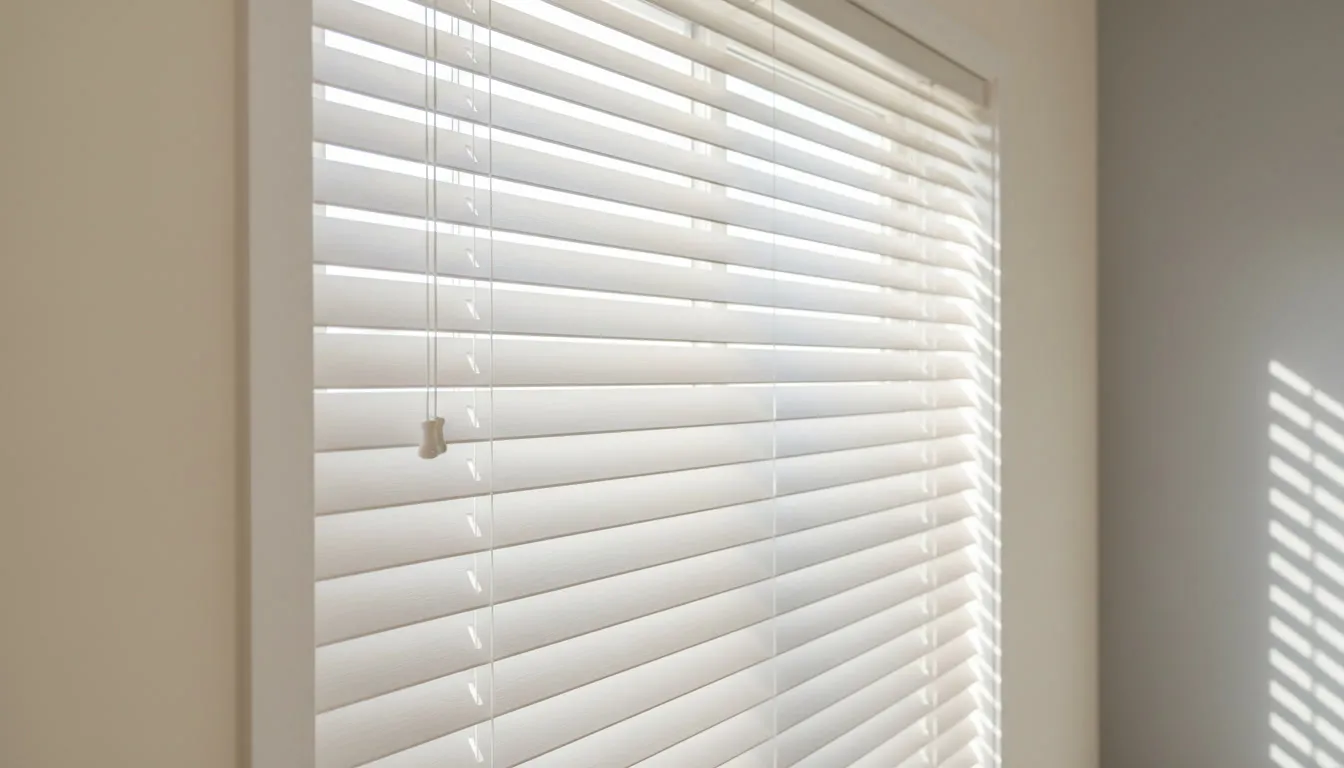

How Long Should Curtains be in bedroom: Expert Tips

So, how long should curtains be in bedroom? The best curtain length for most bedrooms is floor-length, meaning the curtains should just touch or slightly hover above the floor (about half an inch). This gives your room a polished, cozy, and balanced look. Short curtains can work for smaller windows or tight spaces, but long curtains usually look more elegant and help make the room feel taller and more spacious.

Why Curtain Length Matters More Than You Think

Curtains might seem like a small detail, but they have a big impact on how your bedroom looks and feels. They control light, add softness to the space, and play a key role in your room’s mood. The right curtain length can visually stretch your walls, make your ceilings appear taller, and bring a finished look to your entire décor.

Imagine two identical bedrooms one with short curtains stopping mid-wall, and one with long, flowing curtains that almost touch the floor. The second room immediately feels calmer, taller, and more intentional. That’s the power of curtain length.

Interior designers often say curtains act like the “frame” around your bedroom’s view. Without the right length, that frame can look off-balance. Long curtains feel graceful and cohesive, while short ones can feel abrupt unless they’re used for specific practical reasons.

So, even before you pick your fabric or color, think about how your curtain length will influence the way your bedroom feels when you walk in.

Understanding Bedroom Curtain Basics Before Choosing Sizes
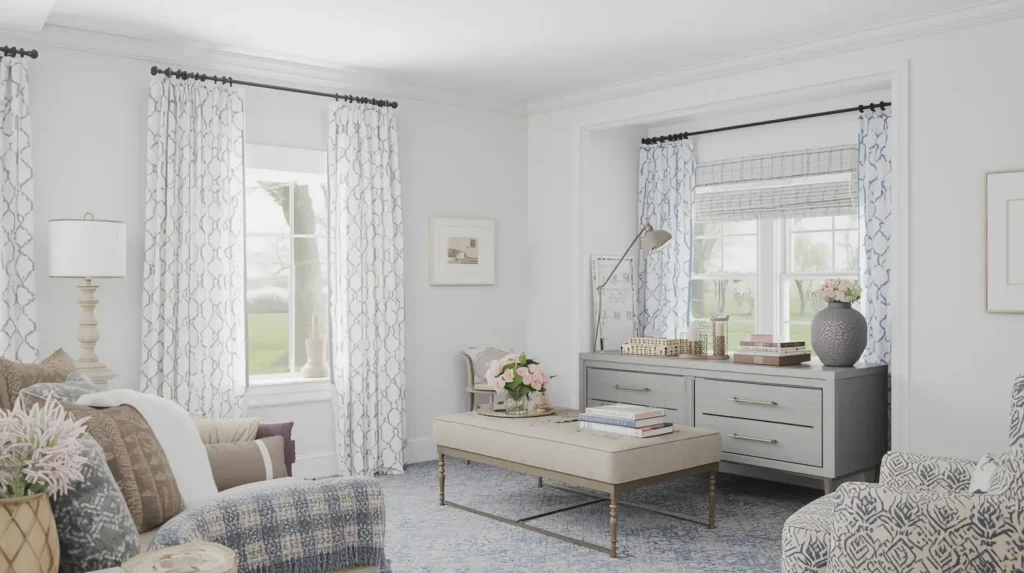
Before you buy or hang your curtains, it’s important to understand the basics curtain sizes, rod placement, and how window proportions affect the overall design.

Curtains come in a few standard sizes like 63, 84, 96, 108, and 120 inches. However, your perfect size depends on how high you hang your curtain rod. Mounting your rod 6–8 inches above the window frame gives a more open, spacious feel.

There are three main types of curtain drops:

  • Sill-length curtains: These end right at the window sill and work well for smaller or older-style bedrooms.
  • Apron-length curtains: These hang just below the sill, perfect for casual or cottage-style spaces.
  • Floor-length curtains: The most common and stylish choice for bedrooms, giving a soft, full, and elegant appearance.

Think of this as building a foundation. If your rod is too low or your curtain too short, the entire look can feel incomplete. On the other hand, properly measured curtains can make even a simple bedroom feel like a designer’s work.

How Long Should Curtains Be in Bedroom

The ideal curtain length for bedrooms is typically floor-length or slightly shorter about half an inch above the floor. This creates a neat, tailored look without letting the fabric drag and gather dust.

If you want a cozy, romantic touch, let the curtains just “kiss” the floor. This means the hem barely brushes the ground, which adds softness and elegance. For a more dramatic or formal look, some people choose “puddled” curtains fabric that extends 1–2 inches onto the floor.

Professional Tip: For busy households or homes with pets, hovering curtains (about half an inch off the floor) are practical and still stylish. They’re easy to clean around and don’t collect dirt.

In design terms, curtain length should match your personality and lifestyle. If you love a clean, modern look, go for precise measurements. If you love a dreamy, hotel-like atmosphere, try slightly longer panels that softly rest on the floor.

Ideal Curtain Length Explained in Simple Terms
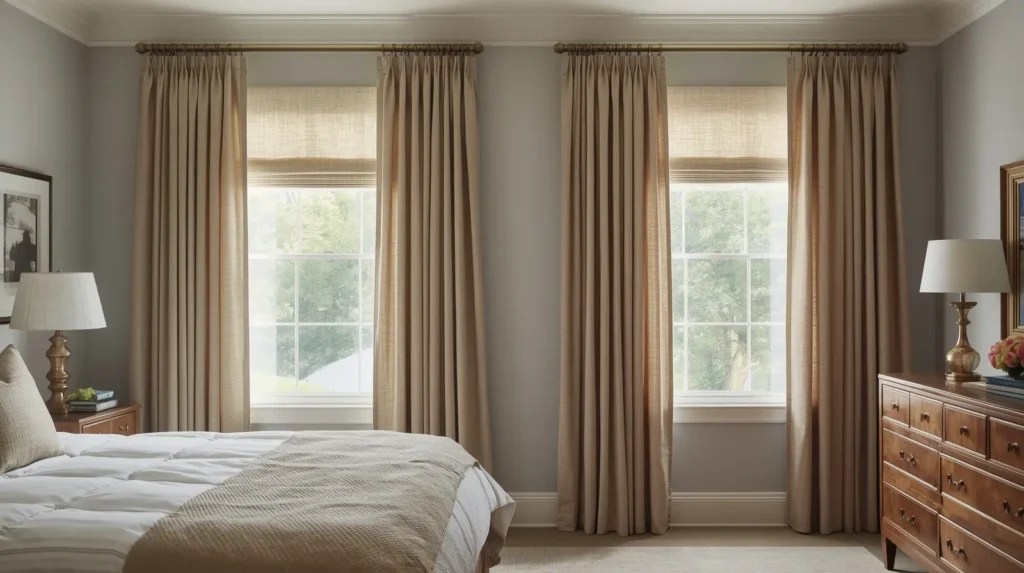
Ideal Curtain Length Explained in Simple Terms

When you hear “ideal curtain length,” it simply means choosing the length that fits your room’s height, design style, and daily use.

For example, a bedroom with low ceilings can instantly look taller when you hang your curtain rod closer to the ceiling and use long panels that go all the way to the floor. This vertical line draws the eyes upward, making your room appear larger.

For high ceilings, long curtains are almost always a must. They bring warmth and balance to tall walls that might otherwise feel empty.

If your bed or dresser sits below the window, you might consider apron-length curtains to keep things neat and accessible. But remember, shorter curtains are best reserved for specific situations most modern bedrooms look better with long ones.

Pro Insight: When in doubt, go longer rather than shorter. You can always hem extra fabric, but you can’t add length later.

Which Curtain Length Looks Best for Different Bedroom Styles

The right curtain length depends not only on your window height but also on your bedroom’s style. Let’s break it down by look and mood:

  • Modern or Minimalist Bedrooms: Clean, floor-grazing curtains that hover just above the ground create a crisp, uncluttered feel. Think neutral tones and light fabrics like linen or cotton.
  • Classic or Traditional Bedrooms: Floor-length curtains that gently touch the floor give a timeless, graceful appearance. Heavier fabrics like velvet or damask work beautifully here.
  • Coastal or Relaxed Bedrooms: Curtains that float about one inch above the floor allow for easy air circulation and give a breezy, casual look.
  • Romantic Bedrooms: Try curtains that “puddle” slightly. That extra fabric creates softness and gives a sense of luxury.

Each style tells a story. The secret is choosing a curtain length that matches your room’s personality. For instance, pairing long velvet curtains with modern furniture might clash, but pairing them with antique wood tones can look stunning.

Design harmony is the goal and curtain length is one of the easiest ways to achieve it.

Bedroom Curtain Sizes: How to Measure for a Perfect Fit

Getting your curtain length right starts with proper measuring. Here’s how to do it like a pro:

  1. Decide where to mount your curtain rod. For a taller appearance, mount it several inches above the window frame.
  2. Measure from the top of the rod (not the window) to the point where you want the curtain to end usually the floor.
  3. Account for curtain style. If you want them to kiss or puddle, add an inch or two.
  4. Measure window width and multiply by two. This ensures full, gathered coverage even when closed.

For example, if your window is 50 inches wide, your curtain panels should total about 100 inches in width. This keeps them from looking flat or too tight when drawn.

Expert Tip: Always measure twice. It might seem simple, but curtain length errors are among the most common mistakes homeowners make. Measuring correctly saves money, time, and frustration.

At CV Floor & Blinds, we’ve seen how custom-length curtains elevate a bedroom instantly. When curtains perfectly fit the window and touch the floor neatly, the entire room feels more peaceful and complete.

Short Curtains vs Long Curtains Which Works Better in Bedrooms

Let’s settle this debate once and for all.

Short curtains:

  • Work best for children’s rooms or small windows above furniture.
  • Are easy to clean and maintain.
  • Can feel casual or playful in design.

Long curtains:

  • Make ceilings look taller.
  • Add elegance, warmth, and softness.
  • Are more flexible across different design styles.

A good way to decide is by considering room purpose. A master bedroom benefits from long, elegant curtains, while a kid’s room may need shorter ones for practicality.

Imagine standing in a hotel suite every curtain you see touches the floor. That’s not an accident; it’s design psychology. Long curtains frame the window and ground the entire space, giving your eyes a natural flow from top to bottom.

So, when comparing short curtains vs long curtains, long wins for adults, style, and comfort.

Should Bedroom Curtains Touch the Floor or Stop Short
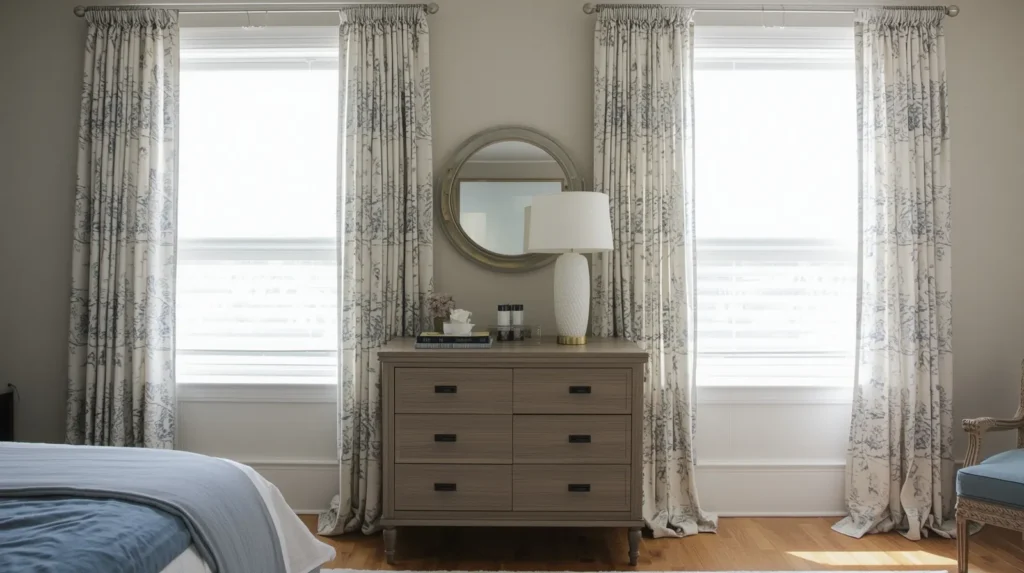
Should Bedroom Curtains Touch the Floor or Stop Short

This question comes up often, and the answer depends on your personal taste and maintenance habits.

If you like neat and tidy spaces, have your curtains hover half an inch above the floor. It’s practical, especially if you vacuum often or live in a dusty environment.

If you love luxury or dramatic style, go for curtains that touch the floor or have a small “puddle” of fabric. These create a soft, layered effect that looks great in cozy bedrooms.

However, avoid curtains that hang awkwardly several inches above the floor. They make the window look unfinished and smaller than it really is.

Professional Advice:

  • In busy homes, hovering curtains are best.
  • In formal or guest bedrooms, floor-touching curtains add warmth and sophistication.
  • If your floor is uneven, slightly hovering curtains will keep everything looking even.

This balance between beauty and practicality is key to making your bedroom feel both clean and comfortable.

Common Mistakes When Choosing Curtain Length

Even with all this information, many homeowners still run into problems. Here are the biggest mistakes to avoid:

  1. Guessing measurements: Always measure your windows and rod placement. Guessing often leads to costly re-dos.
  2. Buying pre-sized curtains without checking your wall height: Not all ceilings are standard height, and pre-sized curtains might fall short.
  3. Hanging rods too low: Mounting the rod just above the frame makes the window look smaller. Raise it higher for a designer touch.
  4. Forgetting about furniture placement: A headboard or nightstand under the window might affect your curtain length choice.
  5. Choosing fabric that’s too stiff: Heavy or stiff materials don’t drape nicely at floor-length. Opt for soft fabrics that flow.

Example:
A homeowner once installed 84-inch curtains for their 9-foot ceilings. The result? The curtains ended 6 inches too short, making the room feel awkwardly cut off. Once replaced with 96-inch panels, the whole room looked taller and more balanced.

Small adjustments like this can completely transform the way your bedroom feels.

Expert Tips from CV Floor & Blinds for Beautiful Results in Coachella, CA

At CV Floor & Blinds, we’ve helped countless homeowners find the perfect curtain length and fabric combination for their bedrooms. Here are some expert tips that can make your space stand out:

  • Match your curtain color to your wall undertones. This creates harmony and prevents visual clutter.
  • Layer curtains and sheers. This allows light control and privacy while maintaining elegance.
  • Always go wider than your window. Extend the rod at least 4–6 inches past each side of the window frame. This makes windows look larger.
  • Steam your curtains after hanging. Wrinkles can make even expensive fabric look cheap.
  • Invest in good hardware. Quality rods and rings make a difference in how smoothly curtains move and how long they last.

When done right, your curtains won’t just look beautiful they’ll enhance your sleep environment. Proper light control means you can rest better while enjoying a room that feels stylish and complete.

Final Thoughts: Creating a Balanced, Cozy Bedroom with the Right Curtain Length

Curtains are one of those design elements that often get overlooked but make one of the biggest impacts once installed correctly.

The perfect curtain length brings everything together the bed, the windows, the light, and the walls. It makes your room feel taller, softer, and more cohesive. And while there are general rules to follow, your personal taste and comfort always come first.

If you ever feel uncertain, remember this: Curtains that touch or nearly touch the floor will almost always look right. They’re timeless, practical, and flattering to nearly every room style.

So whether you’re redecorating your entire home or just freshening up your bedroom, take the time to measure carefully and visualize the final result. The few extra minutes you spend planning will reward you with years of comfort and beauty.

Ready to transform your bedroom? Contact CV Floor & Blinds today for expert help choosing, measuring, and installing your dream curtains. Our team can guide you through styles, fabrics, and lengths to create a bedroom that looks as good as it feels.
Related Post

waterproof flooring for basements

How to Choose Waterproof Flooring for Basements

The best waterproof flooring for basements is luxury vinyl plank or waterproof laminate because both resist moisture, prevent mold, and look great for years. These materials are easy to install, durable, and affordable compared to traditional flooring types. In short, if your basement often gets damp, choosing waterproof materials will protect your space, reduce maintenance, and improve comfort and home value. Understanding the Challenge of Basement Flooring Basements are unique areas in a home because they sit below ground level. This makes them more likely to collect moisture, especially during heavy rain or when humidity levels are high. Many homeowners notice that even if the floor looks dry, small cracks or poor sealing can allow water to seep through concrete over time. That constant moisture can damage floors, weaken adhesives, and even cause mold to grow. Choosing the right flooring for your basement is not only about looks but also about keeping your home healthy and strong for years. Why Waterproof Flooring for Basements Matters Waterproof flooring plays an important role in preventing long-term problems in basements. Regular floors like carpet, hardwood, or simple laminate can absorb water, leading to bad smells and permanent stains. Once the flooring absorbs moisture, it often needs full replacement. On the other hand, waterproof flooring keeps water from soaking in. This protects the base layer underneath and prevents bacteria, mold, or mildew from forming. It also keeps the space comfortable all year round, even when outside weather changes. Installing waterproof flooring is a smart investment because it saves repair costs, keeps the air cleaner, and increases the resale value of your home. What Type of Floor Is Best for Basements The best flooring for basements depends on how the space is used. If it’s a living area, you might want a warm surface that looks like real wood. If it’s a storage or laundry space, durability is more important than style. Here are some of the best types: Each type offers unique benefits, but waterproof vinyl or tile often wins for comfort, cost, and performance balance. Comparing Traditional vs. Waterproof Basement Flooring Traditional flooring like carpet or wood can make a basement look cozy but doesn’t hold up against moisture. Water can seep under the surface, ruin the subfloor, and cause the materials to swell or rot. Waterproof flooring, however, is built with tight seams, non-porous layers, and moisture-resistant adhesives. These designs block water, preventing long-term issues. Even if there’s a minor spill or humidity rise, waterproof floors stay stable and clean. In short, traditional options are better for dry upper floors, while basements benefit most from materials made to fight moisture and water damage. Flooring for Basements That Stay Dry and Stylish Today’s homeowners don’t need to choose between looks and protection. Modern waterproof basement flooring combines both. Vinyl and tile flooring come in wood, stone, or concrete styles that fit any decor. Many waterproof materials are designed to feel warmer and softer underfoot than old-fashioned concrete. You can easily find flooring that matches your walls, lighting, and furniture without worrying about leaks. This balance of comfort and durability is what makes modern basement flooring a favorite choice for homeowners who value both design and practicality. Waterproof Basement Flooring Options to Consider Here are a few waterproof flooring options that perform exceptionally well in basements: Each option offers a balance of function, price, and appearance, so you can pick one that fits your needs and style preferences. How to Prepare a Concrete Basement Floor Before Installation Before installing waterproof flooring, it’s important to prepare the surface properly. Start by cleaning the floor thoroughly to remove dirt, oil, or old adhesive. Then, fill in any cracks or holes using a concrete patch compound. Once the surface is smooth, apply a sealant to protect it from hidden moisture that could rise from underneath. If the area has a high moisture level, adding a vapor barrier under the new flooring helps prevent long-term water issues. Preparation is key. A clean, level, and sealed surface ensures the flooring lasts longer and performs better. Budget-Friendly Basement Floor Covering Ideas You don’t have to spend a fortune to make your basement both beautiful and waterproof. Some affordable solutions include: Even on a tight budget, you can achieve a stylish finish that stands up to moisture and daily use. The key is choosing materials made for basement conditions rather than standard interior floors. Expert Advice on Maintaining Waterproof Flooring Maintaining waterproof basement flooring is simple but essential. Sweep or vacuum regularly to prevent dirt from scratching the surface. Use mild cleaners without harsh chemicals to preserve shine and strength. If you notice any water pooling or leaks, address them immediately to prevent long-term issues. Most waterproof materials resist stains, but quick cleaning keeps them looking new. Avoid heavy dragging of furniture or sharp tools that could damage the protective layer. Regular care helps waterproof floors last for many years without losing their appeal. Why Homeowners in Coachella, CA Trust CV Floor & Blinds For years, homeowners have turned to CV Floor & Blinds for expert flooring advice and professional installations. The brand’s experience with moisture-prone areas like basements ensures every customer gets durable and beautiful results. Locals appreciate that the company offers a full range of flooring products, from luxury vinyl to custom laminate, each tested for water resistance and performance. When it comes to protecting your basement from humidity and leaks, working with professionals who understand local climate and home structures makes a difference. Transform Your Basement with Confidence Your basement has the potential to become one of the most functional and comfortable spaces in your home. By choosing waterproof flooring, you protect your investment and create a space that looks great year after year. Whether you’re planning a new home gym, a playroom, or a cozy lounge, start with a floor designed to handle moisture and heavy use. With help from CV Floor & Blinds, you can turn your basement into a dry, welcoming, and lasting part

Read More »
best retractable screen door

Best Retractable Screen Door

The best retractable screen door combines smooth movement, strong materials, and smart design to protect your home from insects while keeping airflow natural and visibility clear. It should glide quietly, lock securely, and vanish neatly into its frame when not in use. A top-quality screen fits perfectly, resists wear, and matches your home’s style. This guide by CV Floor & Blinds explains what features to look for, how to maintain them, and why they are the best choice for long-term comfort and convenience. A Modern Way to Welcome Fresh Air into Your Home Fresh air brings life into every space, making rooms brighter and more comfortable. Many homeowners want this benefit without dealing with bugs or dust. Retractable screen doors provide an elegant solution. Unlike traditional hinged screens, they roll smoothly into a narrow frame when not needed, leaving the doorway completely open. The best screen doors are designed to blend into your home’s architecture. Whether you have a classic or modern design, a retractable screen adds value without changing the look. Its thin frame and clear mesh maintain your view while improving airflow and ventilation. This small addition can improve daily living. By opening your main doors during cooler hours, you can reduce air-conditioning use and enjoy natural circulation that feels clean and refreshing. Families find that spaces feel bigger, lighter, and more connected to the outdoors. Understanding Retractable Screen Doors and How They Work A retractable screen door is built around a tensioned roller mechanism housed inside an aluminum cassette. The mesh extends horizontally across the door opening and locks into place using magnetic or latch-based closures. When released, the screen retracts automatically into its frame. This structure protects the screen when not in use, keeping it safe from damage, sunlight, and wind. The mechanism is designed to handle thousands of open-and-close cycles without sticking or tearing. It is ideal for homes where both function and appearance matter. Different systems fit different door types. Single-panel models suit entry or side doors. Wider units work for sliding glass doors and patios. For double or French doors, two screens meet in the center, forming a complete seal while maintaining flexibility. Every type gives homeowners control over airflow without sacrificing security or style. What Makes the Best Retractable Screen Door Worth Investing In Choosing the right retractable screen door is about long-term performance, not just appearance. A high-quality design uses premium materials and thoughtful engineering. The best retractable screen door will have: Durability is the main advantage. Inferior products may look fine at first but soon sag or jam. Premium models are built to last more than ten years with minimal maintenance. That durability, paired with aesthetic appeal, makes them an investment rather than a short-term purchase. They also contribute to energy efficiency. By improving natural airflow, a retractable screen door reduces reliance on mechanical cooling systems. It allows homeowners to ventilate spaces naturally while keeping insects and dust outside. Best Screen Doors for French Doors: Design and Function Combined French doors are known for beauty and openness, but their double-panel design requires a special screening method. The best screen door for French doors uses a double retractable system. Two mesh panels glide from each side and connect magnetically in the middle. This design allows flexibility. You can open one side for light traffic or both for wide access. The magnets are strong enough to hold against pressure yet release easily when needed. When retracted, the entire system disappears inside slim housings mounted on each door frame. These screens preserve the architectural appeal of French doors. The mesh remains nearly invisible, keeping your outdoor view clear. For households that value appearance as much as practicality, double retractable screens are the most refined solution. Their movement is smooth, quiet, and durable enough for frequent daily use. Comparing the Best Screen Doors for Different Entry Types Different entryways require tailored solutions. Here are the key variations: Single Entry Doors Slim retractable units fit within the frame without changing door structure. They open silently and retract to one side, maintaining easy access. Sliding Glass Doors: These models feature flat, low-profile tracks that blend into the floor. Their mesh stays firm even under pressure, offering stability against wind. Patio and Balcony Doors: Wider openings benefit from reinforced frames and double-cassette systems. They can handle constant use and exposure to sunlight. Double or French Doors: As discussed, two synchronized retractable screens ensure complete coverage while keeping both doors functional. When comparing options, also consider the type of mesh. Standard fiberglass is flexible and cost-effective. Polyester or pet-resistant mesh adds strength for families with animals. For sun-exposed areas, UV-resistant material prevents discoloration and extends lifespan. Each doorway has unique demands, so it’s best to choose based on use frequency and environment. Key Features That Define the Top-Rated Retractable Screen Doors A reliable retractable screen should offer both precision and comfort. The most important features include: These features separate high-performance products from standard options. They also ensure the screen maintains its look and function even in demanding climates or frequent daily use. When all these elements are integrated correctly, the door feels effortless to use an indicator of professional engineering. Best Materials and Finishes for Modern Retractable Screens Materials define both performance and appearance. The frame and mesh should complement your home while resisting damage over time. Frame:Aluminum is the most common because it is lightweight yet strong. Powder-coating protects against corrosion and provides smooth texture. Homeowners can match it with trim color for a seamless finish. Mesh:Fiberglass mesh is flexible and affordable. Polyester mesh is tougher and holds up against scratches and pets. Fine-weave options provide better insect protection, while solar-blocking mesh filters heat and UV rays. Finishes:Choose between matte, satin, or gloss finishes to blend with your door frame. Darker tones like charcoal or bronze create contrast, while lighter shades feel subtle and modern. Proper combination of these materials makes the screen both beautiful and resilient. With good care, a quality mesh and coated frame

Read More »
how many curtain rings per panel

How Many Curtain Rings per Panel You Really Need

If you’re wondering how many curtain rings per panel you really need, the short answer is between 7 and 13 rings per curtain panel, depending on your curtain’s width, weight, and fabric type. A 50-inch-wide curtain usually looks best with 9 to 10 evenly spaced rings. This helps your curtains glide smoothly across the rod without bunching, sagging, or looking uneven. Knowing the right number of rings is key to achieving a balanced, professional appearance that enhances your space. Whether you’re styling a cozy living room or a modern office, following this simple rule ensures your drapes hang beautifully and move effortlessly. The Basics of Hanging Curtains the Right Way Hanging curtains might seem simple, but it’s one of those small details that make a huge difference in your home. The right setup changes how your windows frame light and how your space feels. When your curtains hang perfectly, they add warmth, texture, and balance to a room. Curtain rings play a big part in this. They’re the connection between your fabric and the rod, allowing you to open and close your curtains smoothly. Using too few rings can make the curtain sag and look uneven. Using too many can make it stiff and unnatural. Think of it like this: the rings are the “support team” that helps your curtains perform their best. Once you understand how to use them correctly, even an ordinary window can look designer-level. Understanding Drapery Curtain Rings and Their Role Drapery curtain rings may seem like small details, but they play a big role in how your curtains function and look. They hold the top edge of your curtain securely and allow it to glide smoothly across the rod whenever you open or close it. These rings come in different forms, such as clip rings, hook rings, and eyelet rings, each designed for a specific purpose. Clip rings work well for casual or lightweight curtains since they can be attached directly to the fabric without any sewing. Hook rings are better suited for pleated or heavier drapes where a more structured, elegant appearance is desired. Eyelet rings, on the other hand, are often used with modern drapes that already have built-in metal grommets for a clean, simple finish. When selecting your rings, pay attention to their color and finish so they match the curtain rod. Shades like bronze, gold, or matte black can completely change how your window treatment complements the rest of the room. Beyond the aesthetic side, drapery rings also help protect your fabric by spreading its weight evenly across the rod. This reduces stress on the top seam, prevents tearing, and allows the curtains to maintain their original shape for years. How Many Curtain Rings Per Panel Is Ideal? The ideal number of rings depends on your curtain size, fabric weight, and how you want it to look. A good general rule is one ring every 4 to 6 inches across the top of the panel. Here’s how to calculate: This formula keeps folds even and the curtain hanging straight. For example: If your curtain is lined or extra heavy, go toward the higher end of that range to avoid sagging. Recommended Curtain Ring Count for Common Panel Sizes Here’s a detailed table for quick reference when shopping or installing curtains: Curtain Width Ideal Number of Rings Spacing Between Rings Fabric Type 40–50 inches 8–10 rings 5–6 inches Light or medium fabric 60–72 inches 10–12 rings 5 inches Medium to heavy 84–100 inches 12–14 rings 5–6 inches Heavy drapes Over 100 inches 14–16 rings 6 inches Very thick or wide panels These measurements help your curtain maintain consistent pleats and even movement. Pro Tip: Don’t skip the end rings. They keep the curtain edges anchored, preventing curling or drooping. How Far Apart Should Curtain Rings Be? Even spacing is one of the most important details when hanging curtains because it creates balance and symmetry. Most professionals recommend placing each curtain ring about four to six inches apart. This distance allows the fabric to fall into gentle, natural folds without stretching too tightly or bunching unevenly. To measure the spacing accurately, start by laying your curtain flat on a clean surface. Measure its total width, then set aside about two inches on each end to leave room for the edge rings. Divide the remaining width by the number of spaces between rings to find the correct distance. For instance, if your curtain panel is fifty inches wide and you’re using ten rings, you’ll have nine spaces between them. Dividing forty-eight by nine gives you roughly five and a third inches between each ring, which is ideal for smooth folds. Taking the time to measure carefully before hanging your curtains ensures a professional finish. When each ring is evenly spaced, the curtains hang straight, open easily, and look clean and intentional from every angle. How Many Curtain Rings for a 50-Inch Panel? The most common curtain width in homes is 50 inches, and for that size, 9 to 10 curtain rings usually work perfectly. If you use fewer than that, you’ll notice sagging between rings. If you use too many, the curtain will feel stiff and lose its natural flow. The goal is to make sure the curtain folds gently without stretching. Here’s a simple method to get it right: Example: For a living room curtain made of medium-weight cotton, 10 rings spaced every 5 inches will create smooth folds and allow easy opening. Tip from CV Floor & Blinds: Always test one panel first. This lets you adjust spacing before hanging the entire set. How Many Curtain Clips or Hooks per Curtain Panel? If your curtains use clips or hooks instead of sewn-in rings, the same spacing rule applies. The number of curtain clips per panel should match your ring count usually 8 to 10 for a 50-inch curtain. Here’s how to get it right: Heavier drapes, like blackout or lined curtains, may need an extra clip or hook to keep the

Read More »
Table of Contents